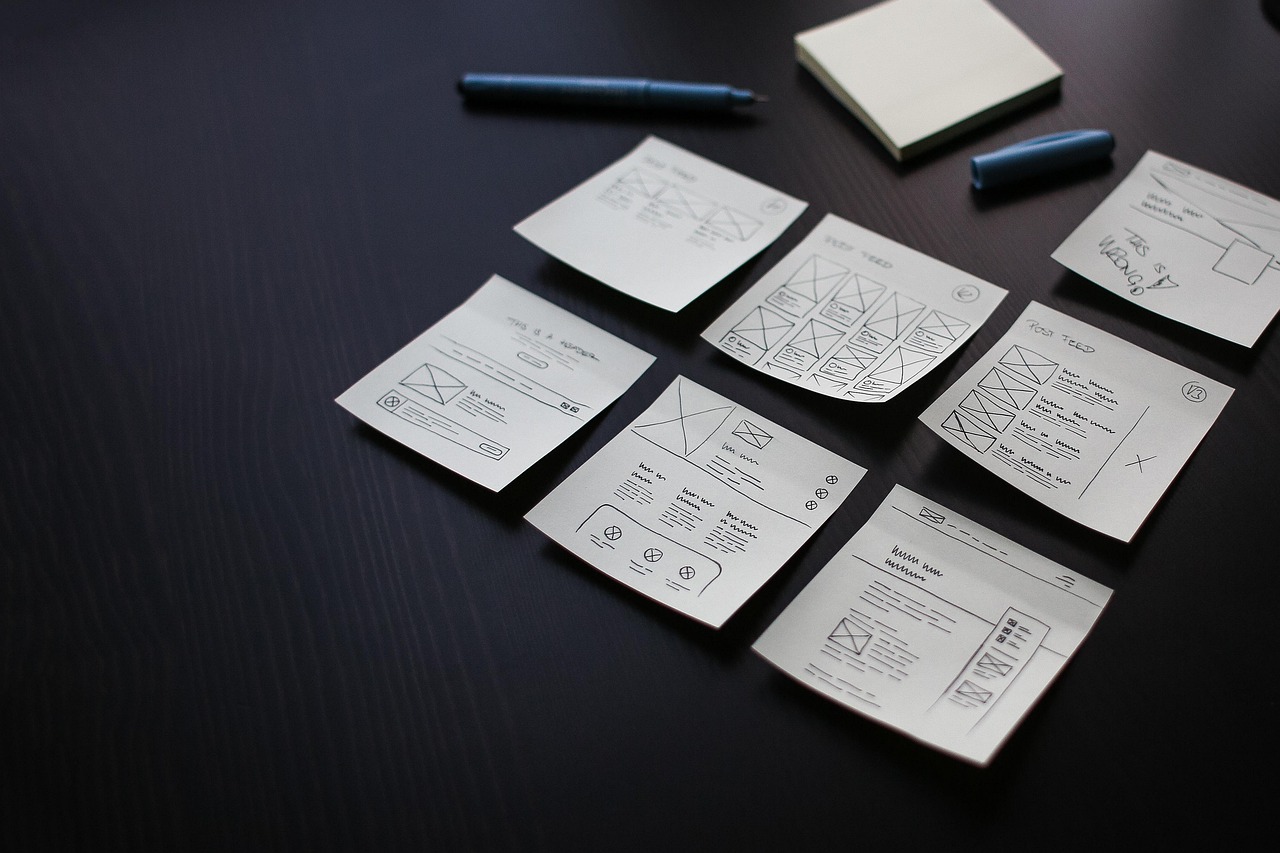
When starting a new game project, what is the first thing designers usually do? For many, the answer is brainstorming or creating a paper prototype. If you read game design guide books like me, you will find authors consistently recommending paper prototyping as an essential first step in the design process. However, as widely accepted as this practice is, it raises an important question: is paper prototyping truly effective for every type of game?

The primary goal of prototyping is to reduce risk by clarifying ideas as early as possible. Paper prototyping has become a widely recommended starting point largely because of its accessibility and low cost. Everyone has a pen and paper, and almost anyone can use them to visualize ideas quickly. Through sketching, writing, and rearranging elements on paper, vague and scattered thoughts gradually become structured. Designers can suddenly realize, “No, we can’t fit all of these elements into this scene,” or “The connection between these two story beats doesn’t actually work.” This kind of immediate, visual reasoning is difficult to achieve through spreadsheets or text documents alone.


However, paper prototyping is not the only way to explore ideas quickly in the early stage. Other common approaches include using physical objects(e.g., LEGO, tokens) or digital prototype. Physical objects make spatial relationships instantly tangible. Distance, blocking, and relative positioning become visible and intuitive as soon as components are placed on a table. Tokens allow elements to be added or removed effortlessly, so that designers can begin testing interactions immediately through manipulation of these elements. Digital prototyping offers a different set of advantages. It is particularly effective for repeated testing and system consistency. Designers may choose to quickly assemble a prototype in a game engine using existing components, but digital prototyping does not have to involve a full engine at all. Tools like Tabletop Simulator make it possible to test rules, values, and interactions rapidly without committing to production-level implementation. Digital prototypes also make remote playtesting easier, allowing designers to share, modify, and iterate on systems collaboratively.

With so many prototyping options available, how should designers choose between them? One useful approach is to consider what kind of design problem is being addressed. If the focus is on UI/UX, narrative flow, or conceptual structure, paper prototypes are often the most efficient place to start. They help expose logical gaps and unclear connections early on. On the other hand, if the goal is to test numerical balance, spatial relationships, or systemic interactions, physical or digital prototypes may be more appropriate. Each method excels at answering different questions.

In conclusion, paper prototyping remains a powerful and valuable tool. But it is not a universal solution. Its effectiveness depends on whether it is being used under the right conditions and for the right purpose. Rather than treating paper prototyping as a mandatory first step, designers may benefit more from selecting prototyping methods intentionally, based on the specific challenges they are trying to solve.